


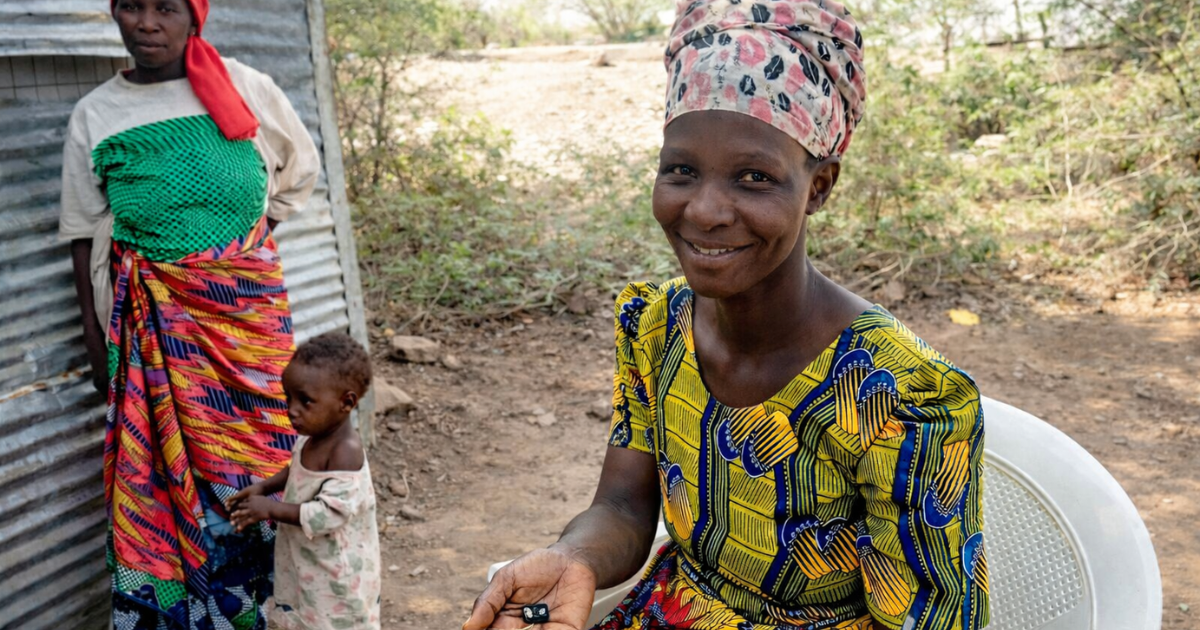
In Kakuma Refugee Camp in northern Kenya, access to education is not something people can take for granted. For many women and girls, learning opportunities are limited by high data costs, lack of infrastructure, and the absence of accessible materials.
But sometimes, change begins with something very small.
Over the past weeks, together with our local partner Restore Hope for Street Children (RHSC), we distributed 105 microSD cards across Kakuma 2, 3, and 4- each preloaded with Audiopedia’s life-changing audio content.
Learning Without Barriers
These cards contain practical knowledge on health, personal development, protection, and everyday life skills - accessible anytime, without internet. And that makes all the difference.
In Kakuma, many families share devices. Internet access is expensive or unreliable. Books are scarce. But a simple memory card can turn any basic phone into a learning tool.
Women can now learn at home, during daily routines, together with others in their community. At their own pace, and on their own terms.
Immediate Impact on the Ground
What stood out most during the distribution was not just the numbers, but the reactions.
Many women inserted the cards into their phones immediately and started listening on the spot. The response was one of curiosity, excitement, and deep appreciation.
One participant shared: “When I opened the content and started listening to the lessons, I was filled with joy and hope. It felt like someone far away truly cared about my future.”
Another woman said: “This SD card has opened a new door for me… I feel more confident now and able to make better decisions for myself and my children.”
These voices remind us: access to knowledge is not just about information. It is about dignity, confidence, and possibility.
More Than a Distribution
The initiative goes beyond handing out SD cards. It is about restoring access to knowledge, strengthening self-reliance and creating opportunities for growth.
In fact, we observed that learning often became a shared experience. Women gathered, listened together, and discussed what they heard, extending the reach far beyond individual users.
Offline audio learning removes one of the biggest barriers to education in low-resource settings: Connectivity. It meets people where they are, with tools they already have.
As one beneficiary put it: “This is not just a memory card - it is a source of knowledge.”
Looking Ahead
With strong engagement, positive feedback, and clear demand, the Kakuma initiative is just the beginning. Our next steps include expanding distribution to reach more women and girls, improving logistics and device compatibility and monitoring long-term usage and impact.
Because every card distributed is more than a device. It is a step toward empowerment, independence, and a better future.