


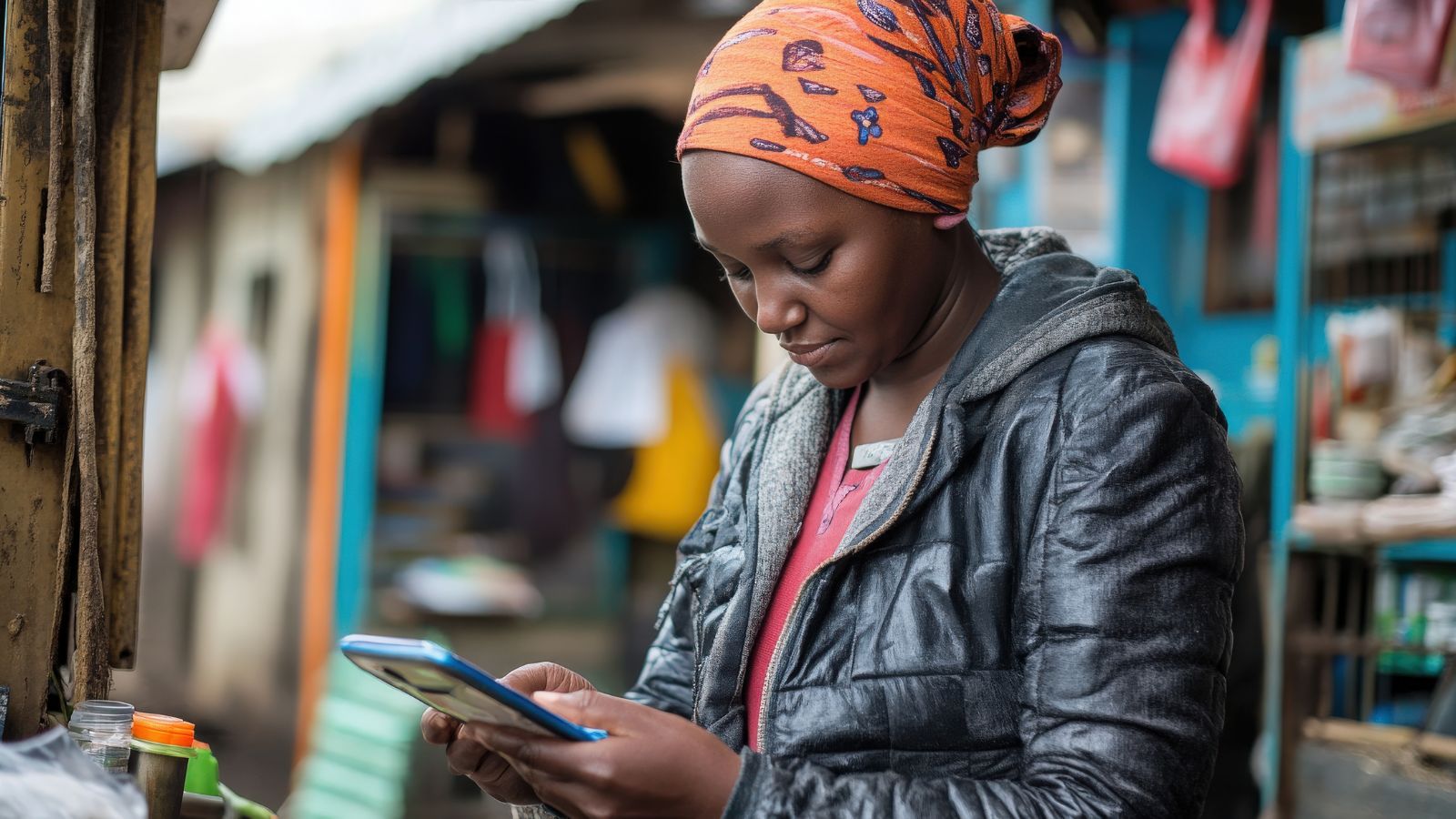
Audiopedia has been included in the United Nations Industrial Development Organization (UNIDO) and United Nations Conference on Trade and Development (UNCTAD) Digital Economy Solution Navigator with a 5-star rating, recognising its voice-first, multilingual, offline-ready approach to digital financial literacy.
Some lessons are easier to hear than to read - especially the ones about money. How to open a mobile wallet, choose a safe PIN, compare a loan, avoid a scam, price goods with a margin, or plan a month’s cash flow - these are everyday decisions that change lives the moment they become clear.
That is why Audiopedia has put digital financial literacy at the centre of our work, delivered in the languages people actually use. Today, practical audio playlists cover fifteen languages across sub-Saharan Africa. They turn financial jargon into everyday conversation and meet listeners where they are - through two simple, reliable rails that fit very different realities.
The first rail is online: the Audiopedia.org playlists. When coverage is available and affordable, a phone and a few megabytes are enough. People can browse topics, listen in short bursts, and share what matters with family or peers. This channel scales quickly, keeps content fresh, and lets communities discover exactly the lesson they need in the moment they need it.
The second rail is offline: micro-SD cards. Where connectivity is fragile or expensive, tiny storage carries hours of local-language audio to the last mile. Cards pass from hand to hand, move between basic phones and small speakers, and keep working regardless of data costs or network outages. Through SD4Africa we add a circular layer by reusing returned micro-SD cards - turning dormant hardware into portable libraries of financial know-how.
Why does this matter - for women, and for the wider economy? Because confidence with money is agency. When a woman can recognise a fair loan, protect her account, separate household and business cash, and price her products sustainably, her family becomes more resilient and her enterprise more stable. As more women transact safely, small markets formalise, trust grows along value chains, leakage falls, and digital payments gain traction. The result isn’t only individual progress; it is a healthier local economy that can weather shocks.
This voice-first, multilingual, offline-ready approach has now been recognised by the United Nations. UNIDO and UNCTAD have included Audiopedia in their Digital Economy Solution Navigator with a five-star rating. The Navigator doesn’t reward bright ideas on paper; it highlights solutions that are relevant, feasible and scalable, and that demonstrate real-world impact with strong partnerships. For us, this nod matters because it validates something simple: inclusive digital economies start with inclusion in understanding. If a person cannot reliably read the language of finance, or cannot afford to be online, they still deserve clear, actionable guidance - delivered in a form that works where they live.
Audiopedia began with a modest premise: make essential knowledge audible, keep the technology light, respect local language and context, and organise the pieces so others can carry them further. Digital financial literacy has become one of the clearest expressions of that premise. From Hausa and Kiswahili to Kinyarwanda and beyond, the work is the same - let money speak in local voices, over rails that people can access today. Recognition helps. But what matters most is that more people understand their options, avoid risks, and take the next step with confidence. That is how inclusive digital economies grow: one informed decision at a time, in a language you can hear.